Hiển thị các bài đăng có nhãn Vietnam travel. Hiển thị tất cả bài đăng

Thứ Bảy, 16 tháng 7, 2011

Overview

Climate
Vietnam is located in both a tropical and a temperate zone. It is characterized by strong monsoon influences, but has a considerable amount of sun, a high rate of rainfall, and high humidity. Regions located near the tropics and in the mountainous regions are endowed with a temperate climate. 
The monsoon climate also influences to the changes of the tropical humidity. In general, in Vietnam there are two seasons, the cold season occurs from November to April and the hot season from May to October. The difference in temperature between the two seasons in southern is almost unnoticeable, averaging 3ºC. The most noticeable variations are found in the northern where differences of 12ºC have been observed. There are essentially four distinct seasons, which are most evident in the northern provinces(from Hai Van Pass toward to the north): Spring, Summer, Autumn, and Winter.

Vietnam Tet holiday

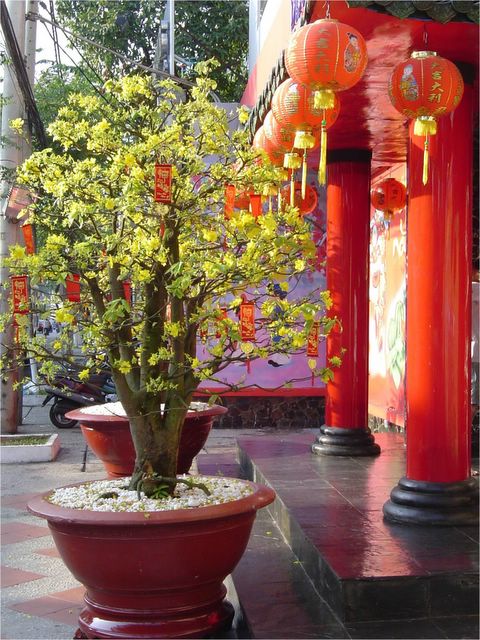
Tet Nguyen Dan (The Lunar New Year)

Tet has become so familiar, so sacred to the Vietnamese that when Spring arrives, the Vietnamese, wherever they may be, are all thrilled and excited with the advent of Tet, and they feel an immense nostalgia, wishing to come back to their homeland for a family reunion and a taste of the particular flavours of the Vietnamese festivities.
Tet starts on the first day of the first lunar month and is the first season of the new year (according to the lunar calendar), and therefore it is also known as the Tet Nguyen Dan, literally meaning Fete of the First Day, or the Tet Tam Nguyen, literally meaning Fete of the Three Firsts.

Folk-games


Rice cooking competitions (thi thoi com)
During Tet, a number of villages in northern and central Vietnam hold cooking contests that may sound simple, but follow strict and complex rules: Cooking in the wind and rain. Tu Trong Village, Thanh Hoa Province has a temple dedicated to the 11th century warrior Le Phung Hieu. 
During the temple's weeklong festival the first week of Tet, villagers hold culinary competitions: cooking ordinary rice in water, steaming sticky rice and making rice cakes.

Contestants cook in the open air while in a bamboo boat floating on the village pond. Charcoal, the usual fuel, is prohibited. Instead, each competitor receives some dried sugar cane, which burns only with difficulty. The challenge increases if it is windy and raining. Each contestant must set her rice pot in exactly the right place to take advantage of the wind and avoid extinguishing the fire.

The competition begins precisely at dawn. Hundreds of boats are tied up along the pond bank since as many as 200 young women may participate.

Architecture


Before the 10th century, villages and hamlets appeared in this period according to several tales of Linh Nam. The ancient Vietnamese used wood to build houses to protect themselves from tigers and wolves. Two kinds of houses were depicted on the bronze drums; one in the shape of a boat and the other in a shape similar to a turtle shell.

Due to dense lakes, swamps, rivers, and highly humid tropical climate, the most appropriate building material is bamboo and wood to set up houses on low stilts. At the end of the 19th century, houses on stilts remained in mountainous areas, midlands, and plains throughout the country.